
Scientists reveal how first-in-class therapeutic drug treats cardiac disease at the molecular level
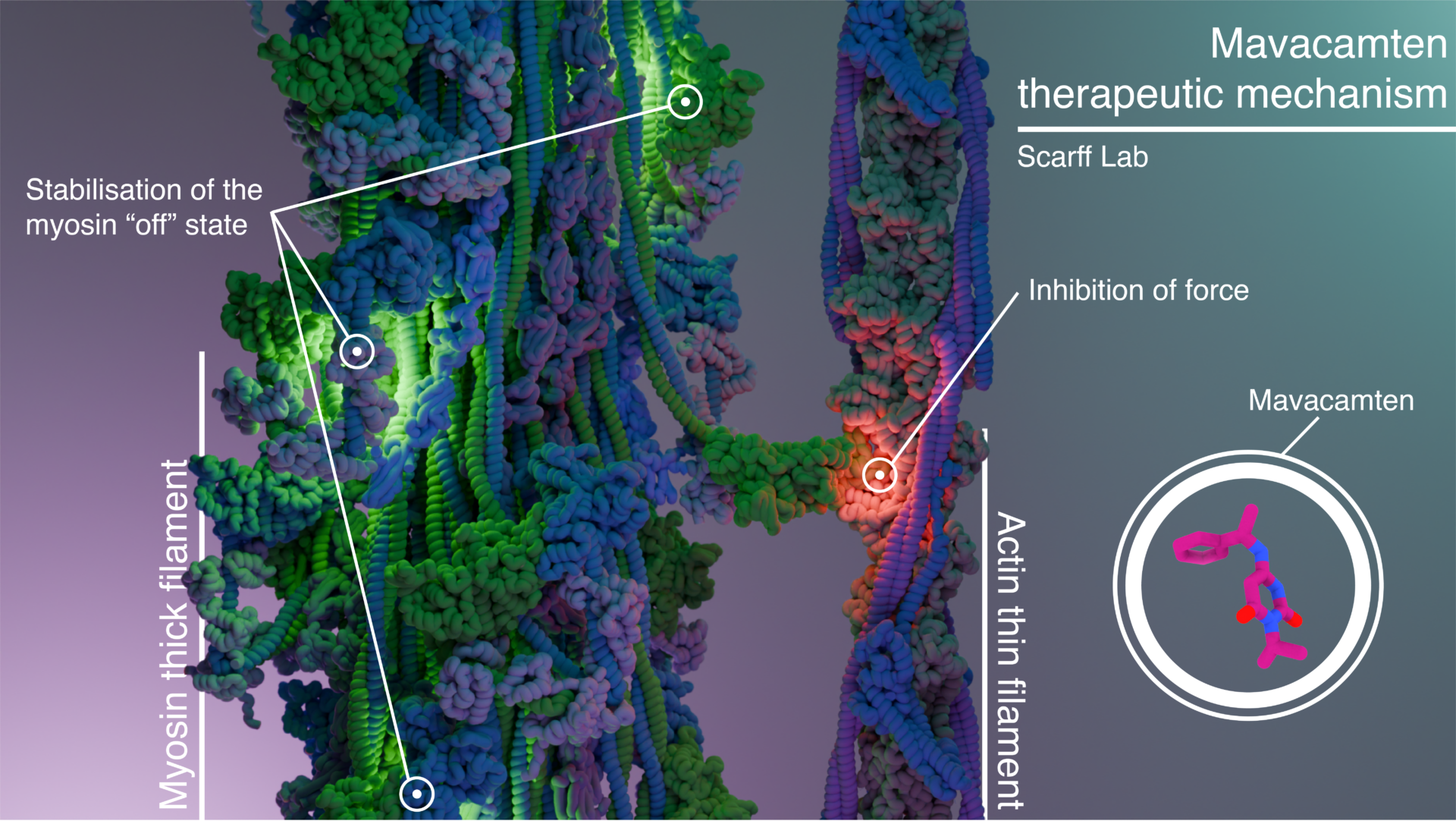
Researchers at the University of Leeds have uncovered exactly how the breakthrough cardiac therapeutic mavacamten works at a molecular level, providing critical new insight into how excessive heart muscle contraction can be safely regulated in patients with hypertrophic cardiomyopathy (HCM).
In a study published in Science Advances, scientists from the Astbury Centre for Structural Molecular Biology and the Leeds Institute of Cardiovascular and Metabolic Medicine, in collaboration with colleagues in the United States, used advanced cryo-electron microscopy and mass spectrometry to visualise how mavacamten interacts with cardiac myosin, the molecular motor that powers every heartbeat.
HCM affects approximately one in 500 people and is the most common cause of sudden cardiac death in young adults. Until recently, treatments were limited to managing symptoms or invasive surgical procedures. Mavacamten, the first FDA‑approved cardiac myosin inhibitor, directly targets the underlying cause of the disease, but its precise mechanism of action had remained unclear.
The Leeds-led team shows that mavacamten works by locking myosin into a naturally occurring “off” configuration called the interacting‑heads motif. In this state, myosin heads are prevented from generating force, effectively placing a molecular brake on heart muscle contraction.
Using high‑resolution structural techniques, the researchers demonstrated that mavacamten stabilises this off‑state by restricting the internal movements required for force generation. This both reduces the number of myosin motors available to contract and slows the heart’s mechanical cycle, promoting improved relaxation between beats, restoring the hearts natural molecular brake disrupted by HCM.
Dr Charlie Scarff, senior author of the study and principal investigator at the Astbury Centre, said:
“This is the first time we’ve been able to see, in atomic detail, how mavacamten restrains cardiac myosin in its off state. By stabilising myosin’s off‑state, the drug effectively dials down heart contraction, targeting the root cause of disease rather than just treating symptoms.”
Importantly, the study also helps explain why patients with different genetic mutations may respond differently to the drug. By identifying key structural regions involved in drug binding and myosin regulation, the findings could help guide precision medicine approaches for HCM and inform the design of next‑generation cardiac therapies.
The work showcases the power of structural biology to bridge fundamental molecular mechanisms and real‑world clinical impact and highlights the Astbury Centre’s role in advancing research at the interface of biology, medicine and chemistry.